



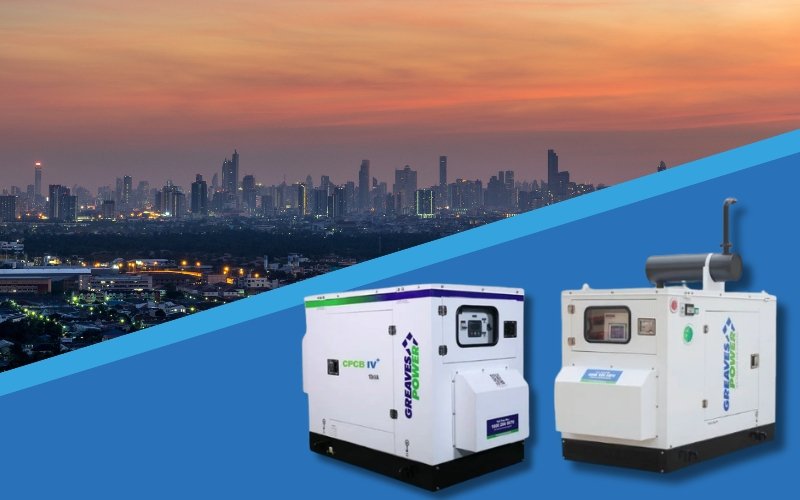
How to Choose the Right DG Set Capacity for Your Business
Introduction
Power interruptions can disrupt operations, damage equipment, and lead to financial losses for businesses that depend on continuous electricity. Choosing the right DG set capacity ensures stable power supply, optimal fuel efficiency, and long-term reliability.
However, many businesses either overestimate or underestimate generator capacity, resulting in unnecessary expenses or insufficient power backup. In this guide, we explain how to select the correct diesel generator capacity for your business and what factors to consider before purchasing a DG set.
Why Choosing the Correct Generator Capacity Matters
Selecting the proper generator size is critical for operational efficiency. A generator that is too small may overload and fail during peak demand, while an oversized generator leads to excessive fuel consumption and higher maintenance costs.
The correct DG set capacity provides:
- Stable voltage and frequency output
- Optimal fuel efficiency and lower operating costs
- Longer engine lifespan
- Reliable backup during power failures
- Safe operation for sensitive equipment
Businesses that calculate power requirements accurately can ensure uninterrupted productivity and avoid unexpected downtime.
Step 1: Calculate Your Total Power Requirement
The first step in choosing a generator is determining the total electrical load your business consumes.
Start by listing all equipment that will run during a power outage, such as:
- Industrial machines
- HVAC systems
- Lighting systems
- Computers and IT equipment
- Pumps and compressors
- Refrigeration systems
Each device has a rated power requirement measured in kilowatts (kW) or kilovolt-amperes (kVA).
To estimate your generator requirement:
Total Load (kW) ÷ Power Factor (0.8) = Required Generator Capacity (kVA)
For example:
If your total load is 40 kW
40 ÷ 0.8 = 50 kVA generator required
This calculation helps determine the minimum generator capacity required.
Step 2: Consider Starting Load Requirements
Many industrial machines require higher power during startup compared to normal running conditions.
Equipment such as:
- Motors
- Air compressors
- Pumps
- Chillers
can require 2–3 times the running power when starting.
If your generator is not sized properly, it may trip during startup. This is why businesses often select a generator with 20–30% extra capacity above their calculated load.
Step 3: Identify the Right Generator Capacity Range
Once the load is calculated, you can determine the suitable generator size.
Small Businesses and Shops
Small offices, retail outlets, and clinics usually require generators between:
These generators provide compact backup power for essential systems.
Medium Commercial Applications
For restaurants, small factories, and commercial buildings:
- 10 kVA Generator
- 15 kVA Generator
- 20 kVA Generator
- 25 kVA Generator
These generators can handle moderate power loads efficiently.
Industrial Power Requirements
Manufacturing units and industrial facilities typically require higher capacity generators, such as:
- 50 kVA Generator
- 100 kVA Generator
- 125 kVA Generator
These DG sets provide stable backup for heavy equipment and production operations.
Large Infrastructure and Industrial Projects
Mega facilities and infrastructure projects may require ultra-high capacity generators like:
These are designed for mission-critical environments such as airports, refineries, and data centers.
Step 4: Understand Generator Power Ratings
Generators are generally rated in two ways:
Prime Power
Used when the generator operates continuously for long durations.
Standby Power
Used only during power outages as backup.
Businesses should confirm whether their DG set will operate as prime power or standby power before selecting the capacity.
Step 5: Consider Fuel Efficiency and Operating Cost
Fuel consumption plays a major role in generator operating expenses.
Factors affecting fuel efficiency include:
- Engine design
- Load factor
- Generator size
- Maintenance condition
Choosing the right capacity ensures the generator runs at optimal load levels, improving fuel efficiency and reducing diesel consumption.
Step 6: Evaluate Installation and Space Requirements
Before purchasing a generator, businesses must consider installation factors such as:
- Available installation space
- Acoustic enclosure requirements
- Fuel tank storage
- Ventilation and exhaust systems
- Electrical control panel integration
Professional installation ensures safe operation and compliance with industry standards.
Generators are typically integrated with Diesel Generator Control Panels for monitoring, protection, and automation.
Common Mistakes When Choosing Generator Capacity
Businesses often make these mistakes when selecting a DG set:
- Choosing generators based only on price
- Ignoring the starting load requirements
- Selecting oversized generators
- Not planning future power expansion
- Skipping professional load calculation
Avoiding these mistakes ensures reliable and efficient power backup.
Why Businesses Choose Kalpaka Power Control
Kalpaka Power Control Pvt. Ltd. is a trusted provider of diesel generator solutions for commercial and industrial applications.
With over two decades of experience, the company provides:
- CPCB IV+ compliant diesel generators
- Custom DG set solutions for industrial needs
- Installation, testing, and commissioning support
- Generator control panels and synchronisation systems
- Comprehensive maintenance and service support
Their generator range covers 5 kVA to 2250 kVA, supporting projects from small businesses to large infrastructure facilities.
Final Thoughts
Choosing the right DG set capacity is essential for maintaining uninterrupted operations and protecting critical equipment.
By calculating your load requirements, accounting for startup loads, and selecting the appropriate generator capacity, businesses can ensure reliable and cost-effective power backup.
If you are planning to install a diesel generator, consulting from KalpakaPower has experienced supplier can help determine the most efficient capacity for your specific application.
Need Help Selecting the Right Generator?
If you are unsure about the correct DG set size for your facility, consult with industry experts to evaluate your load requirements and recommend the most suitable generator capacity for your business operations.
