



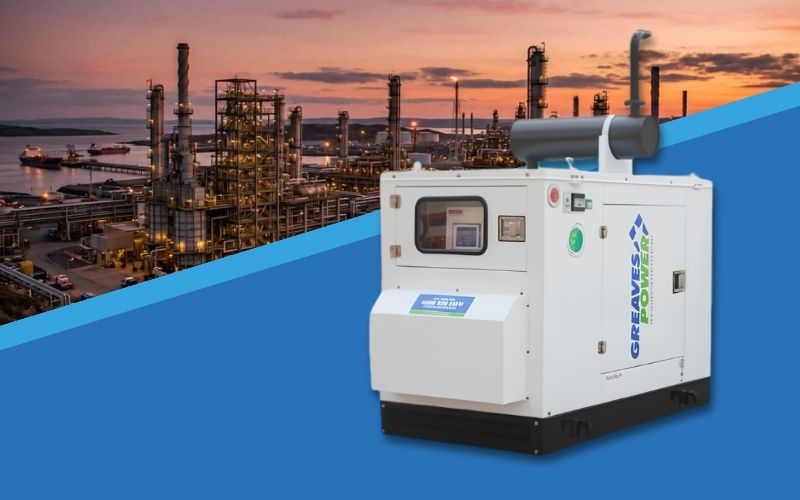
Diesel Generator Installation Guide: Step-by-Step Process, Requirements & Best Practices
Installing a diesel generator correctly is just as important as selecting the right DG set. A generator that is incorrectly positioned, inadequately ventilated, poorly earthed, or improperly connected can experience performance issues, excessive noise, overheating, and unnecessary maintenance problems.
This Diesel Generator Installation Guide explains the major stages involved in installing a DG set, from site assessment and generator positioning to electrical connection, exhaust installation, testing, and commissioning.
For commercial and industrial installations, generator installation should be planned and carried out by qualified professionals according to the applicable manufacturer instructions and local requirements.
What Is Involved in Diesel Generator Installation?
A complete diesel generator installation generally involves more than placing the DG set at the required location and connecting cables.
The installation may involve:
- Site assessment
- Generator capacity verification
- Foundation and positioning
- Ventilation planning
- Exhaust system installation
- Fuel system arrangement
- Electrical cabling
- Earthing
- AMF/control panel installation
- Battery and starting system
- Acoustic and safety considerations
- Testing and commissioning
The exact requirements depend on the generator capacity, installation location, application, building configuration, and manufacturer specifications.
Step 1: Assess the Installation Site
The first step is to evaluate whether the proposed location is suitable for the generator.
Before finalising the installation, the required generator capacity should also be determined through a proper load assessment.
The site assessment should consider:
Available Space
There should be adequate space around the DG set for:
- Air circulation
- Routine inspection
- Maintenance
- Servicing
- Component replacement
- Safe operator access
Avoid installing the generator in a location where technicians cannot safely access the engine, alternator, control panel, filters, batteries, and other serviceable components.
Ventilation
Diesel generators produce heat during operation. Adequate airflow is therefore essential.
The installation should provide a suitable arrangement for:
- Fresh air intake
- Hot air discharge
- Radiator airflow
- Engine combustion air
- Heat removal
Poor ventilation can cause excessive operating temperatures and affect generator performance.
Accessibility
The generator should be positioned so that it can be accessed for maintenance and, where necessary, removed or replaced without major structural modifications.
Step 2: Prepare the Generator Foundation
A suitable foundation helps keep the generator stable during operation.
Depending on the installation, a concrete foundation may be required to provide:
- Structural support
- Stable positioning
- Proper equipment alignment
- Reduced transmission of vibration
The foundation requirements should be determined according to the generator manufacturer’s specifications and the actual installation conditions.
For larger DG sets, structural and civil requirements become particularly important because of the generator’s weight and operating forces.
Step 3: Position the Diesel Generator
Once the foundation and site are ready, the generator can be positioned.
The DG set should be installed according to the manufacturer’s recommended clearances and orientation.
Particular attention should be given to:
- Radiator direction
- Exhaust outlet location
- Air intake
- Control panel accessibility
- Cable entry
- Fuel connection
- Maintenance clearance
For an acoustic enclosure, the enclosure should also have adequate clearance for airflow and servicing.
Step 4: Install the Exhaust System
The exhaust system carries combustion gases away from the generator.
A typical installation may include:
- Exhaust piping
- Flexible exhaust connection
- Silencer
- Supports
- Exhaust termination
The exhaust system must be designed to avoid excessive back pressure and should be installed according to the engine manufacturer’s requirements.
The exhaust outlet should also be positioned appropriately so that exhaust gases do not enter occupied areas or air-intake points.
For indoor DG installations, exhaust routing requires particular attention because incorrect routing can create serious operational and safety issues.
Step 5: Plan the Fuel System
Diesel generators require a reliable fuel supply for continuous operation.
Depending on the generator and application, the fuel arrangement may involve:
- Generator-mounted fuel tank
- External diesel storage tank
- Fuel supply piping
- Fuel return arrangement
- Isolation valves
- Fuel filters
The fuel system should be designed to suit the generator manufacturer’s requirements and the expected operating duration.
Fuel storage and handling should also comply with applicable local safety and regulatory requirements.
Step 6: Complete Electrical Connections
Electrical integration is one of the most important parts of generator installation.
The generator must be connected to the building or facility’s electrical distribution system using appropriately sized equipment and protection.
This may include:
- Generator output cables
- Distribution panels
- Circuit breakers
- Changeover systems
- AMF panels
- Control wiring
- Protection systems
Cable sizing should be based on the generator output, voltage, installation method, cable length, ambient conditions, and applicable electrical requirements.
The generator should not be connected directly to a building electrical system without appropriate switching and protection equipment.
Step 7: Install the AMF and Control Panel
For automatic backup operation, an Automatic Mains Failure (AMF) system can monitor the utility supply and initiate the generator sequence when mains power fails, depending on the system configuration. For more information on generator control systems, see our guide to diesel generator control panels.
A generator control system can monitor parameters such as:
- Voltage
- Frequency
- Engine speed
- Oil pressure
- Coolant temperature
- Battery condition
- Generator operating status
The exact functions depend on the controller installed on the DG set.
For applications requiring multiple generators or more complex power management, additional synchronization and control systems may be required.
Step 8: Complete Generator Earthing
Proper earthing is an important part of diesel generator installation.
The installation may require appropriate earthing arrangements for:
- Generator body
- Electrical system
- Neutral, where applicable
- Associated panels and equipment
The exact earthing arrangement should be determined by a qualified electrical professional based on the generator configuration and applicable electrical requirements.
Earthing should be tested before the generator is placed into normal operation.
Step 9: Install the Battery and Starting System
The battery system provides the electrical power required for generator starting.
During installation, technicians should verify:
- Battery connections
- Polarity
- Battery condition
- Charger operation
- Starting circuit
- Cable connections
Loose or incorrect battery connections can result in starting problems.
The starting system should therefore be checked as part of the commissioning process.
Step 10: Check Cooling and Airflow
Before commissioning the generator, the cooling system should be inspected.
For water-cooled generators, checks may include:
- Coolant level
- Radiator condition
- Cooling connections
- Airflow path
- Radiator fan operation
The installation should ensure that hot radiator air does not recirculate back toward the generator’s air intake.
This becomes particularly important in enclosed generator rooms.
Step 11: Perform Pre-Commissioning Checks
Before starting the generator, the installation team should verify the major mechanical and electrical systems.
A pre-commissioning checklist can include:
- Engine oil level
- Coolant level
- Fuel availability
- Battery connections
- Electrical connections
- Earthing
- Exhaust system
- Ventilation
- Control panel
- Protection systems
- Emergency stop
- Cable terminations
- Generator alignment and mounting
Any installation issues should be resolved before load testing.
Step 12: Test and Commission the Generator
After installation, the DG set should be started and tested under controlled conditions.
Commissioning may include checking:
- Engine starting
- Voltage
- Frequency
- Phase sequence
- Oil pressure
- Coolant temperature
- Generator output
- Control panel operation
- Protection functions
- AMF operation
- Load performance
Where required, the generator can be tested under different load conditions to verify stable operation.
The commissioning process should follow the manufacturer’s recommended procedures and applicable project requirements.
Common Diesel Generator Installation Mistakes
Some common installation problems include:
Installing the Generator in a Poorly Ventilated Area
Insufficient airflow can result in excessive heat and reduced performance.
Incorrect Exhaust Routing
Poorly designed exhaust systems can increase back pressure and create unsafe exhaust conditions.
Insufficient Maintenance Clearance
A generator may operate correctly but become difficult to service if adequate access was not planned during installation.
Incorrect Cable Sizing
Undersized cables can cause excessive voltage drop and heating.
Poor Earthing
Improper earthing can compromise electrical safety and equipment protection.
Inadequate Fuel Planning
Insufficient fuel storage or poorly designed fuel arrangements can affect generator runtime.
Ignoring Starting Loads
A generator may appear adequately sized based on running loads but struggle when motors or other high-inrush equipment start.
Diesel Generator Installation for Different Applications
Installation requirements can vary significantly depending on the application.
Commercial Buildings
Commercial installations may require backup for:
- Lighting
- Computers
- HVAC
- Lifts
- Security systems
- Networking equipment
Hospitals
Hospital installations require careful consideration of critical loads, automatic transfer arrangements, redundancy and electrical distribution.
Manufacturing Facilities
Industrial installations may involve large motors, compressors, pumps and production machinery, making load assessment particularly important.
Data Centres
Data centres generally require highly reliable power infrastructure and may require synchronization, redundancy, automatic transfer systems and other specialized configurations.
Residential Applications
Smaller DG sets can provide backup for essential household loads, but installation must still address ventilation, exhaust, electrical isolation, earthing and safe operation.
How Much Does Diesel Generator Installation Cost?
There is no single installation cost applicable to every diesel generator.
The total cost can depend on:
- Generator capacity
- Distance between DG set and electrical panel
- Cable length and size
- Foundation requirements
- Exhaust piping
- Fuel system
- AMF/control panel
- Synchronization requirements
- Acoustic requirements
- Site accessibility
- Civil and electrical work
For this reason, a site assessment is generally more useful than estimating installation cost from generator capacity alone.
Why Professional Diesel Generator Installation Matters
Correct installation helps the generator operate according to its intended design and makes future maintenance easier.
A professional installation team can coordinate:
Site Assessment → Foundation → DG Positioning → Exhaust → Fuel → Electrical Connection → Earthing → Control System → Testing → Commissioning
This complete approach is particularly important for commercial and industrial facilities where generator downtime can directly affect business operations.
Diesel Generator Installation & Support from Kalpaka Power Control
Kalpaka Power Control provides diesel generator solutions for commercial, industrial and institutional applications.
The company supports customers with generator selection, supply, installation, testing, commissioning, AMC and maintenance requirements.
For businesses planning a new DG installation, professional assistance can help determine the appropriate generator configuration and coordinate the mechanical and electrical requirements of the project.
Frequently Asked Questions
Diesel generator installation generally involves site assessment, foundation preparation, DG positioning, ventilation, exhaust and fuel arrangements, electrical connections, earthing, control systems, testing and commissioning.
Yes, a DG set can be installed in a properly designed generator room, provided that ventilation, exhaust, cooling, fuel arrangements, clearances and applicable safety requirements are properly addressed.
Yes. The appropriate earthing arrangement should be provided based on the generator configuration and applicable electrical requirements.
An AMF system is used to monitor the utility supply and, when configured for automatic operation, initiate the generator's backup sequence when mains power fails.
The required clearance depends on the generator model, enclosure and manufacturer recommendations. Adequate space should be provided for airflow, exhaust arrangements, inspection and maintenance.
Testing and commissioning should be performed after installation to verify generator operation, electrical output, control functions and protection systems according to the manufacturer's procedures and project requirements.
